Evaluación del comportamiento higiénico en colmenas maternas de Apis mellifera en un centro de cría de reinas
Article Sidebar
Main Article Content
Abstract
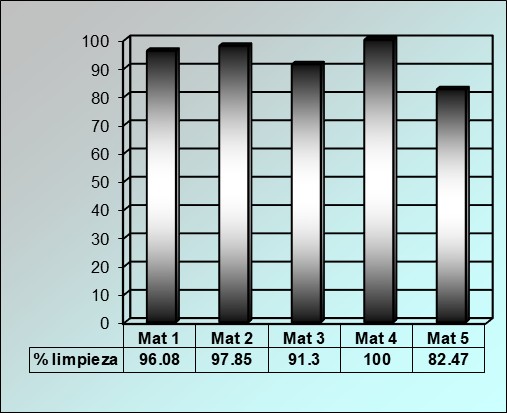
One of the most important aspects in the world beekeeping is the fight against Varroa mite. This parasite has forced the beekeepers to the employment of chemical and others derived for his control what has caused the appearance of residuals in the products obtained from the bees, harming the economy of not few. Lately beehives are looked for that they resist naturally to the infestation, and one of the mechanisms that expresses this resistance is the Hygienic Behaviour. With the objective of determining this characteristic in the maternal beehives of a Queen breeding Center was carried out this work. It was worked in crop time, among the 24 and 29 of December of the 2000. The 5 existent maternal beehives were used, homogeneous as for strength and quantity of bodies (strong and with 1 body), fed artificially with syrup of sugar in the proportion 1:2 sugar/water, and they were applied the Hygienic Behaviour Test by the freezing method (Spivak, 1996), being calculated the percent of cleaning that carried out the bees. A single observation was made at the 48 hours of having begun the experiment. As a result it was obtained that of the 5 beehives, 3 cleaned more than 95% of the cells, 1 cleaned 91.3% and the one that achieved this in smaller quantity made it in 82.93%, being achieved a very good hygienic behaviour in those that cleaned more than 95% of the cells according to Spivak and Downey, (1998) and not so good in the two remaining. It was concluded that these 3 beehives have well expressed the gene of cleaning, and completing their function of maternal, queens obtained from them transmit this characteristic to their descendants and increased this characteristics in production beehives. The others that cleaned less than 95% of the cells, should be substituted for others that in foresaw Hygienic behaviour test achieve it.
Article Details

This work is licensed under a Creative Commons Attribution-NonCommercial 4.0 International License.
Those authors who have publications with this journal accept the following terms of the License Attribution-NonCommercial 4.0 International (CC BY-NC 4.0):
You are free to:
- Share — copy and redistribute the material in any medium or format
- Adapt — remix, transform, and build upon the material
The licensor cannot revoke these freedoms as long as you follow the license terms.
Under the following terms:
- Attribution — You must give appropriate credit, provide a link to the license, and indicate if changes were made. You may do so in any reasonable manner, but not in any way that suggests the licensor endorses you or your use.
- NonCommercial — You may not use the material for commercial purposes.
- No additional restrictions — You may not apply legal terms or technological measures that legally restrict others from doing anything the license permits.
The journal is not responsible for the opinions and concepts expressed in the works, they are the sole responsibility of the authors. The Editor, with the assistance of the Editorial Committee, reserves the right to suggest or request advisable or necessary modifications. They are accepted to publish original scientific papers, research results of interest that have not been published or sent to another journal for the same purpose.
The mention of trademarks of equipment, instruments or specific materials is for identification purposes, and there is no promotional commitment in relation to them, neither by the authors nor by the publisher.
How to Cite
References
Aumeier, P.; Rosenkranz, P.; Goncalves, L.S. Defense mechanisms of honey bees against varroosis and brood diseases: comparison between Apis mellifera carnica and Africanized bees in Brazil. Apidologie. 1996, 27: 4, 286-288; Bj. (1996).
Bar, E.; Rosenkranz, P. Specific hygienic behaviour towards brood cells infested with Varroa jacobsoni of different honey bee races. Annales Universitatis Mariae Curie Sklodowska. Sectio DD, Medicina Veterinaria. 1992, 47: 1, 1-6; Ba. (1992).
Bienefeld, K. Consideration of breeding in selection for varroa tolerance. Deutsches-Bienen-Journal. 1996, 4: 2, 18-23; Bj. (1996)
Boeching, O. Removal behavior of Apis mellifera towards sealed broad cells infested with Varroa Jacobsoni: Techniques, extent and efficacity. Apidologie, 23: 371-373. (1992).
Boecking, O.; Ritter, W. Grooming and removal behaviour of Apis mellifera intermissa in Tunisia against Varroa jacobsoni. J-apic-res. Cardiff : International Bee Research Association. 1993. v. 32 (3/4) p. 127-134. (1993).
Demedio, J. La Varroasis en una zona de la provincia de La Habana. Agente etiológico, índices de infestación y control biotécnico y químico. Tesis Opción al Grado Científico de Doctor en Ciencias Veterinarias (resultados preliminares). Universidad Agraria de La Habana. Cuba. (2000).
Demedio, J.; Mayda V. y Gonzáles A. Manual de enfermedades de abejas y peces. Editorial ENPES, MES. CUBA. (1984).
Demedio, J.; Espaine, L.; Veliz, M.; Verde, M.; de la Cruz, T.; Sanabria J.L . Efectividad de Las tiras de Bayvarol (Flumetrina) contra los ácaros Varroa jacobsoni Oudemans y Acarapis woodi Rennie. Informe técnico. (1997).
Flores, J. M.; Ruiz, J. A.; Ruiz, J. M.; Puerta, F.; Bustos, M.; Padilla, F.; Campano, F. The phenomenon of natural resistance to varroasis. Vida-Apícola España. (Nov-Dic 1995). No.74 p. 44-51. (1995).
Guzmán Novoa, E. Breeding varroa - resistant honey bees. Canadian Honey Council Research Symposium Proceedings 1995., 142-148; Bdo. (1995).
Guzmán, E. y Correa, A. Selección de abejas melliferas (Apis mellifera L.) resistentes al ácaro Varroa jacobsoni O. Vet. Mex 27 (2). (1996).
Guzmán, L. I.; Rinderer, T. E.; Delatte, G. T.; Macchiavelli, R. E. Varroa jacobsoni Oudemans tolerance in selected stocks of Apis mellifera L. Apidologie. 1996, 27: 4, 193-210; Bj. (1996).
Harbo, J. R.; Hoopingarner, R. Resistance to Varroa expressed by honey bees in the USA American-Bee-Journal. 1995, 135: 12, 827; Bj. (1995).
Le-Conte, Y.; Bruchou, C.; Benhamouda, K.; Gauthier, C.; Cornuet, J.M. Heritability of the queen brood post-capping stage duration in Apis mellifera mellifera L. Apidologie. 1994, 25: 6, 513-519; Ba. (1994).
Radionov, U. V.; Shoborshov J. A. Si usted tiene abejas. Editorial Min Moscu pp 36-37. (1986).
Spivak-M. Honey bee hygienic behavior and defense against Varroa jacobsoni. Apidologie 27: 4, 245-260; Bj. (1996).
Spivak, M. and Downey, D.L. Field assays for Hygienic behaviour in Honey Bees (Hymenoptera: Apidae). Journal of Economic Entomology, 91(1): 64 – 70. (1998).
Spivak, M.; Guilliam, M. Facultative expresion of hygienic behavior of honey bees in relation to disease resistance. J. Apis Res. 32, 147-157. (1993).
Spivak, M.; Reuter, G.S. Performance of hygienic honey bee colonies colonies in a commercial apiary. Apidologie 29: 291 – 302. (1998).
Spivak, M.; Reuter, G. A.; Melton R.; Breyfogle, J. Honey bee hygienic behavior and tolerance to Varroa jacobsoni. American Bee Journal. 134 (12):836-837. (1994).
Wallner, A. Varroa-resistant: my method of selection and breeding varroa-resistant honey bee colonies. 1994, 168 pp.; Bd. (1994).